eNews
#01 2026
Engaging Minds and Inspiring Creativity: Blue Schools Camp 2026
By Nozipho Mahlanze, Science Engagement, Grasslands Node, NRF-SAEON
From 3-6 February 2026, Nelson Mandela University, in partnership with the SAEON Grasslands Node, hosted the Blue Schools Camp in Sodwana Bay. The camp brought together 19 Grade 10 and 11 learners from three Maputaland Coastal Plain (MCP) schools (Langelihle High School, Moses Zikhali High School, and Mpiyakhe High School) for an immersive, interdisciplinary learning experience focused on the ocean.
Set in a region of South Africa known for its ecological importance, the camp offered learners a chance to connect with the ocean through scientific inquiry, social understanding, and artistic expression. Beyond observing and recording, the Blue Schools Camp created space for dialogue, reflection, and self-expression, bridging the gap between data, stories, and lived experience.
Expanding ocean education beyond the Natural Sciences
The main aim of the workshop was to help learners think about their own knowledge and connection to the ocean through hands-on learning and creative activities. Many ocean programmes mainly focus on marine biology and conservation. This camp also included social sciences to better understand people’s relationships with the ocean.
In many cases, ocean education focuses more on the environment and the economy, and less on the experiences of children and local communities. As ocean problems increase, it is important to understand how different people value and relate to the ocean in different ways.
The Blue Schools Camp created a safe space for learners to share their views. They were encouraged to see the ocean not only as a natural system, but also as a place connected to culture, history, identity, and daily life.
Learning through science: Investigating plastic pollution
The camp began with a strong scientific foundation. On the first day, learners were introduced to basic research methods and conducted a hands-on study of plastic pollution along the beach in Sodwana Bay. Working in groups, they sampled three different beach zones. Within each zone, they identified three sampling points along a 30-metre transect line. Using a 1×1 metre quadrat, they counted both large plastic items and microplastics. Learners recorded their observations, classified types of plastic, and summarised their findings.
This practical investigation helped learners understand the scale and impact of marine pollution while developing skills in data collection, observation, teamwork, and analysis. For many, it was the first time conducting structured environmental research in their own coastal environment. The experience grounded their understanding of marine conservation in real-world evidence.
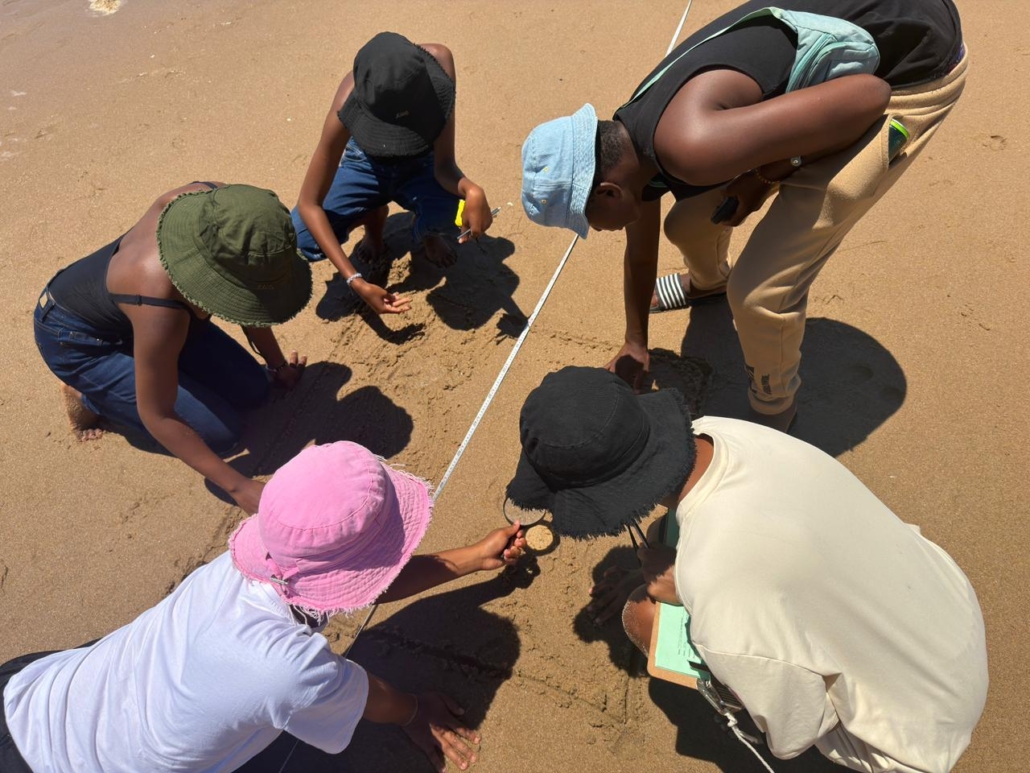
Learners conducting plastic pollution research in Sodwana Bay, using transects to collect data on macroplastics and microplastics.
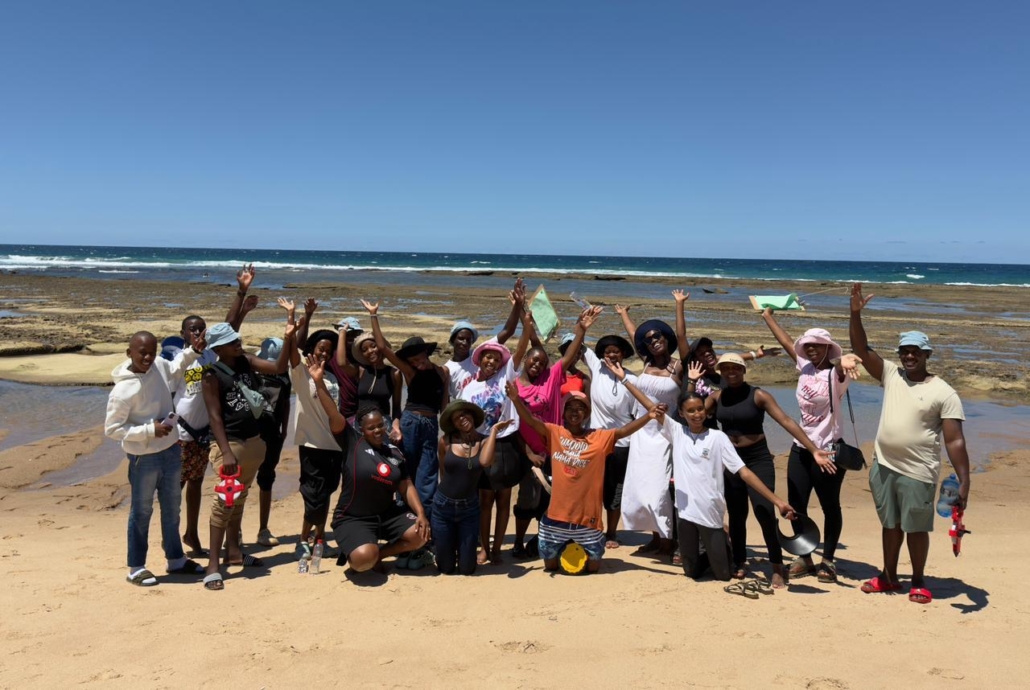
Group photo of participating learners and facilitators at the Blue Schools Camp in Sodwana Bay.
Introducing social science and arts-based methodologies
Following the scientific component, the programme shifted to introduce learners to social science approaches and arts-based research methodologies. Many learners had limited prior exposure to social science concepts, and their existing understanding of the ocean was mostly shaped by natural science, focusing on biological systems and conservation outcomes.
Through facilitated discussions, learners explored questions such as:
- What does the ocean mean to you?
- What are important ocean histories, cultures, and stories that should be preserved
- What is or should be the future of the ocean?
- What do you like most or dislike about the ocean?
- How does the ocean sustain, protect, excite, scare, or inspire you?
- Who benefits from the ocean?
To help them express their responses, learners were invited to use a range of creative methods, including collage, poetry, photo-voice, short stories, painting, drawing, creative writing, podcast, photography, film, or posters. They were encouraged to experiment freely and choose media that resonated with their individual experiences. This part of the programme showed that learners have strong feelings and ideas about the ocean, even if they do not always express them in a classroom setting.
Creativity as a tool for ocean literacy
On the second day, learners worked outside to complete their creative projects. Being close to the ocean helped inspire their ideas. Some created artwork showing both the beauty of the ocean and the problem of pollution. Others wrote creative writing about their personal feelings and experiences. Photo-voice projects captured both beauty and environmental degradation. Short stories and films explored imagined futures of the ocean.
When learners presented their work to the group, the atmosphere was one of attentiveness and respect. Each presentation became a moment of shared vulnerability and insight. Through storytelling and art, learners articulated cultural memories, family experiences, economic realities, and spiritual connections tied to the sea.
The use of arts-based methodologies revealed a strong, often unspoken desire among learners to connect with the ocean in ways that extend beyond scientific terminology. Creativity allowed them to process complex environmental issues emotionally and socially, fostering empathy and critical thinking.
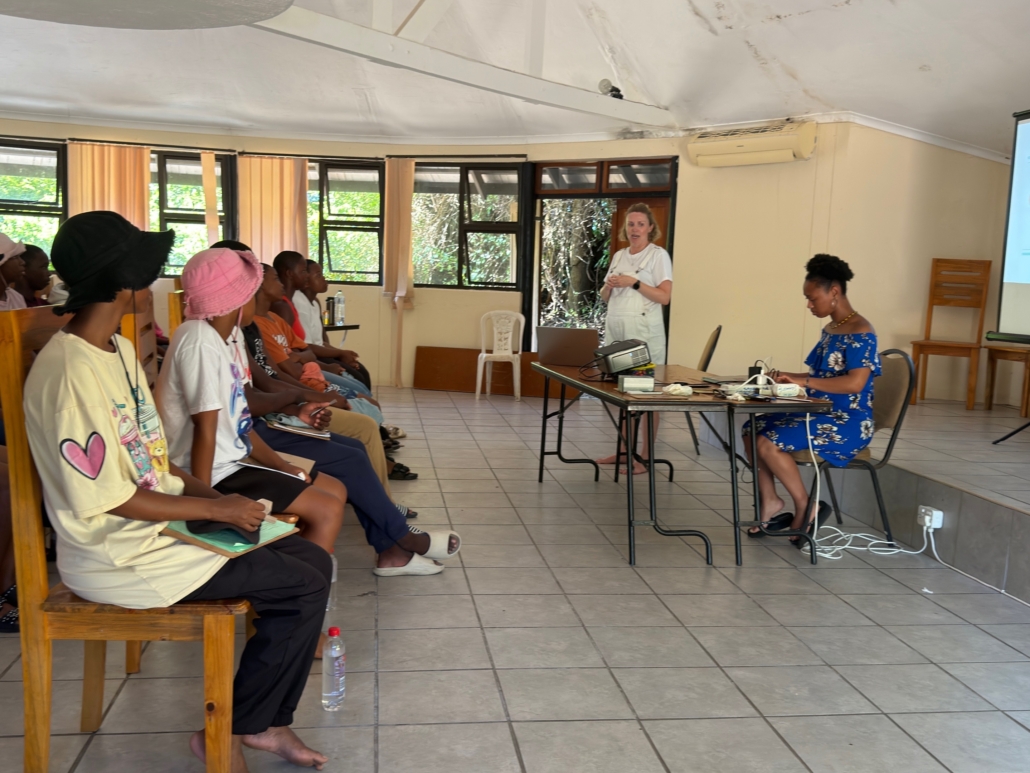
Dr. Mia introduces learners to social science concepts and arts-based research.
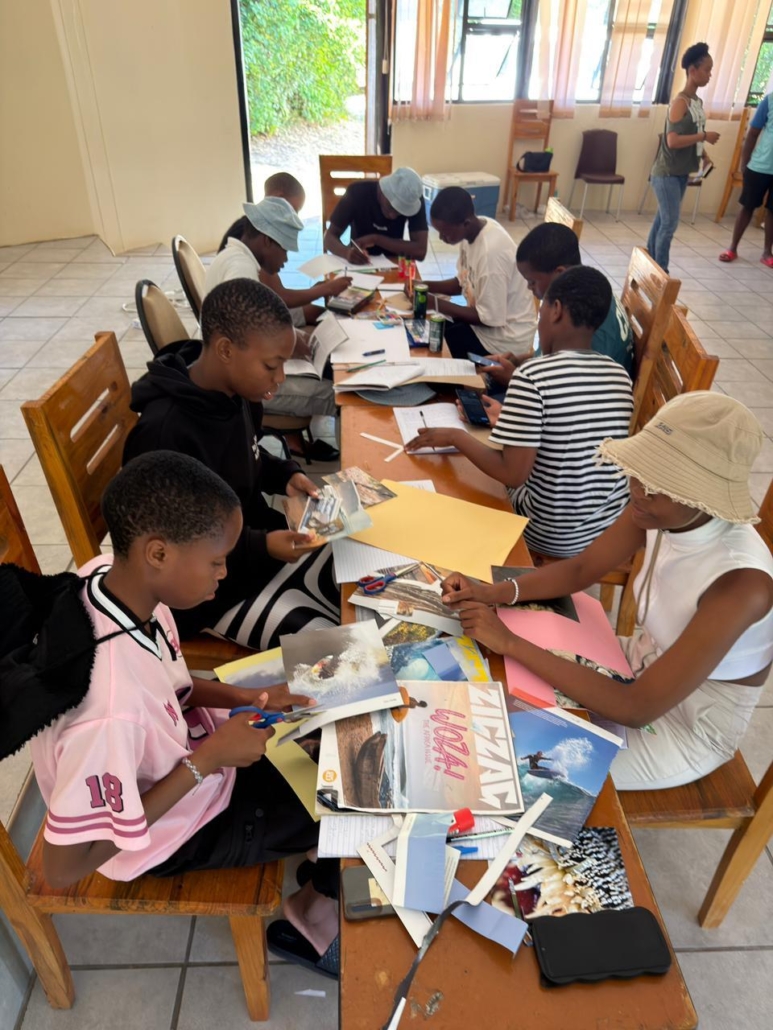
Learners creating their collages using images, colours, and words to reflect their understanding of and connection to the ocean.
Building a more inclusive vision of ocean governance
The camp in Sodwana Bay, along with a preceding workshop near Ocean View in the Western Cape in December 2025, highlighted a significant gap in ocean education: the limited inclusion of youth voices within broader ocean governance conversations. By including social sciences in the Blue Schools Programme, the camp helped create a more complete understanding of ocean care. Protecting the ocean is not only about science, but it is also about people, culture, fairness, and community experiences.
When young people are given platforms to express how they see and value the ocean, education becomes participatory rather than prescriptive. It nurtures a sense of belonging and responsibility, positioning learners not just as students of the ocean but as emerging custodians and advocates.
Lasting impact and reflections
The Blue Schools Camp had a strong impact on the learners. It helped them understand both the environmental and social sides of the ocean. It encouraged them to think more deeply about how people and nature are connected. The creative activities helped learners express their thoughts and feelings in ways that are not always possible in traditional classrooms. They built confidence by presenting their work and listening to others.
By combining science with personal experience, the camp strengthened ocean literacy in a meaningful way. It showed that ocean education is most powerful when it includes knowledge, creativity, culture, and lived experiences. Through this approach, learners were inspired to care for the ocean and to become responsible custodians of the marine environment.
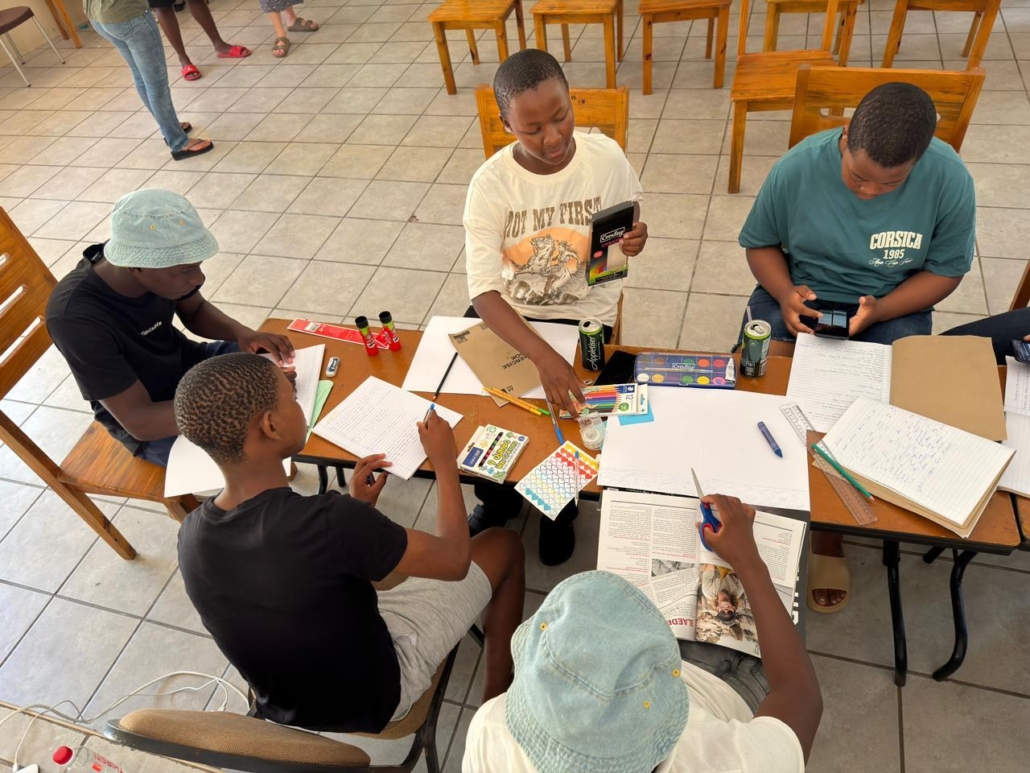
Learners designing collages, writing their stories and creating short films to bring their artwork and ocean narratives to life.
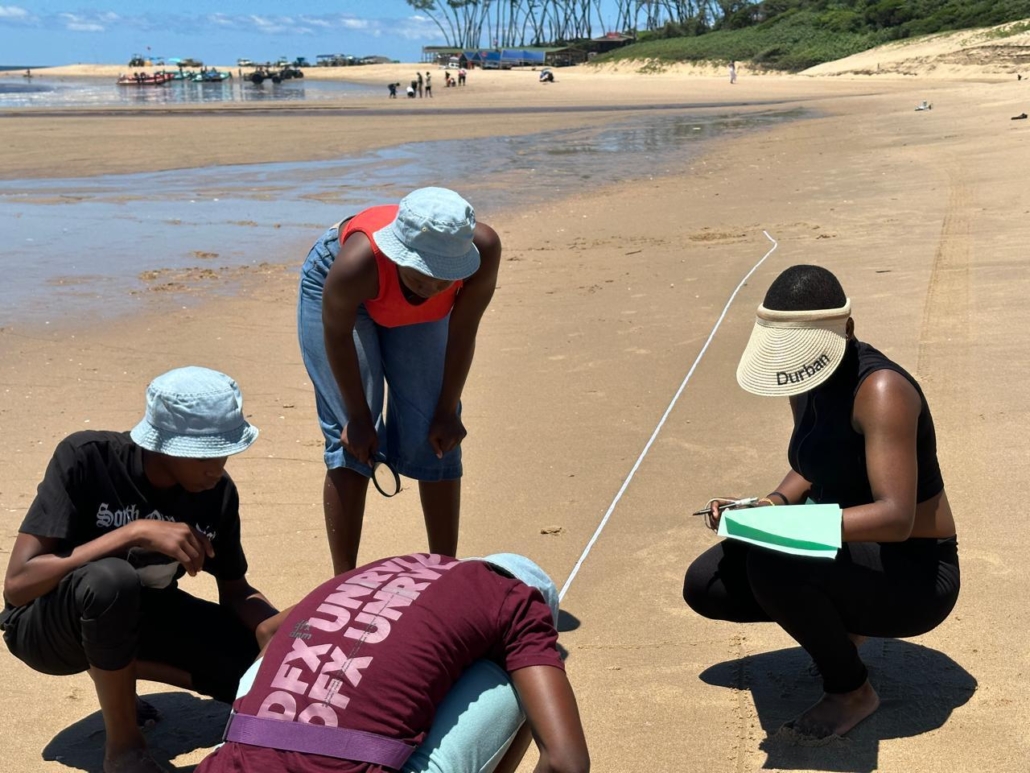
Hands-on learning at Sodwana Bay Beach as learners collect data.