eNews
#06 2025
Inspiring young scientists: Grade 9 learners explore biodiversity at Bonamanzi Game Reserve
By Nozipho Mahlanze, Science Engagement, Grasslands Node, NRF-SAEON
From 6 to 8 October, SAEON’s Grasslands Node and EFTEON Northern Drakensberg hosted an engaging Grade 9 Science Camp at Bonamanzi Game Reserve in Hluhluwe. The camp brought together 16 enthusiastic learners and four educators from four high schools within the Maputaland Coastal Plain (MCP): Langelihle High School, Justice Nxumalo Technical School, Inkosi Moses Zikhali High School and Inkosi Mpiyake High School.
The three-day camp, designed around the theme “Biodiversity and Ecosystems”, aimed to nurture curiosity, scientific thinking and environmental awareness among the young learners. By combining classroom-style sessions with outdoor fieldwork, the camp created an interactive learning experience that made science tangible and exciting. Learners were introduced to the fundamentals of the scientific method and then applied it to real-world investigations focused on the presence and abundance of animal species in various ecosystems.
Laying the groundwork for scientific thinking
The first day focused on equipping learners with a foundation in scientific methods and research principles. Through engaging discussions and guided activities, learners explored what it means to think and work like a scientist. This session laid the foundation for the rest of the camp by helping learners understand how to ask research questions, form hypotheses, design experiments and interpret data. The interactive approach encouraged curiosity and set the tone for the hands-on investigations that followed.
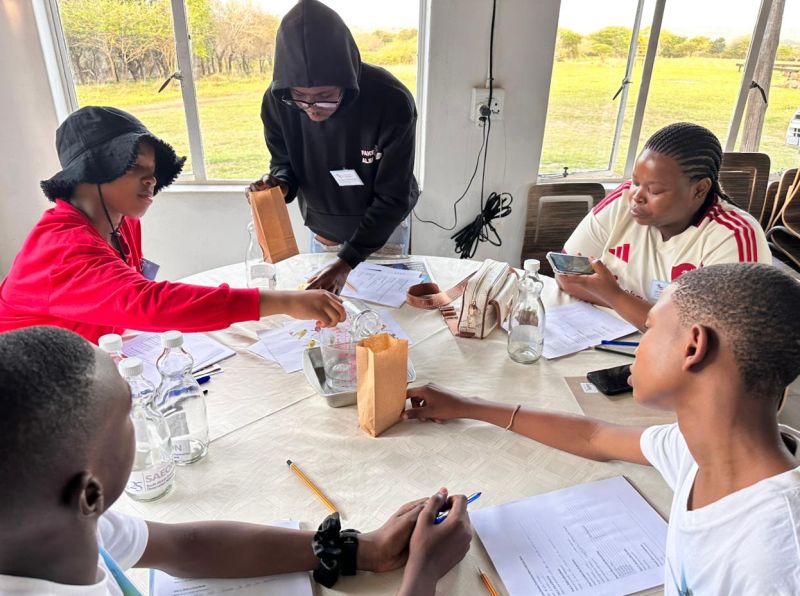
Learners conducting the dancing raisins experiment and recording their results.
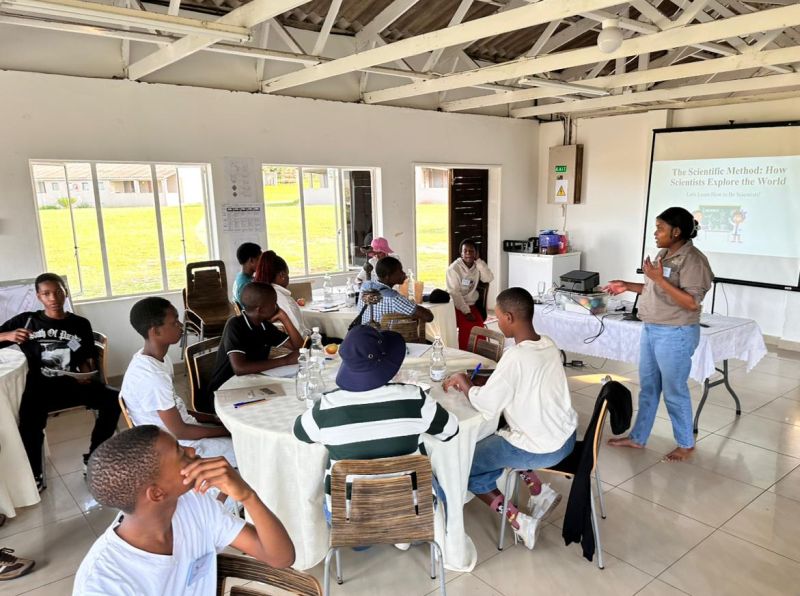
Londiwe Gule doing a presentation on scientific methods.
The day continued with an informative video about Life on Earth and the classification of living organisms, helping learners understand how scientists group and study living things. The final session introduced them to iNaturalist, a citizen science platform that allows users to record and share biodiversity observations. This session inspired learners to explore how technology can contribute to global biodiversity knowledge.
Field-based learning: Science in action
On the second day, learners took part in hands-on exploration and observation in the field. They went on morning and afternoon game drives to three ecosystems in the reserve: grassland, forest and savanna. During these excursions, they observed various animal species, counted individual animals, noted their gender and recorded signs of their presence, including tracks, droppings and sounds.
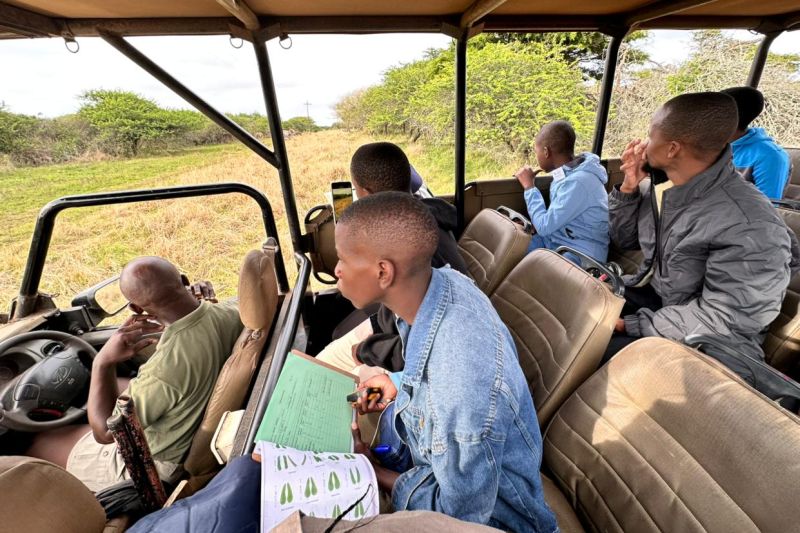
Learners observing animal species on a game drive.
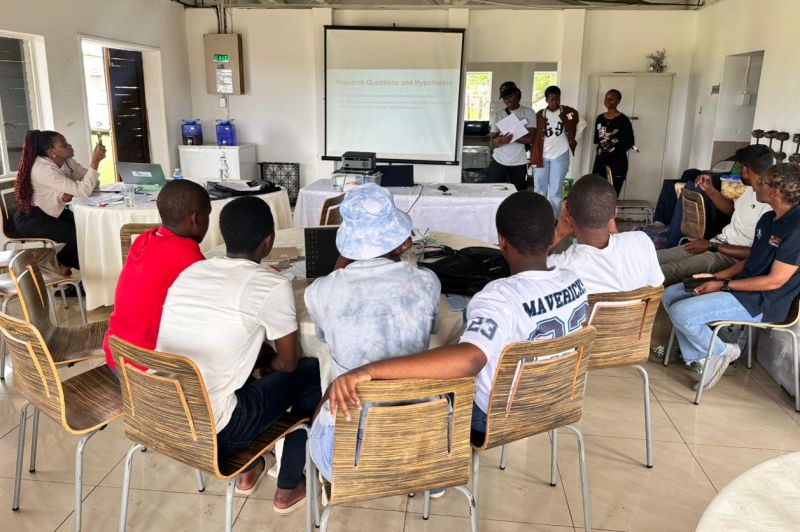
Group presentation by the learners.
Working in small groups, learners practiced careful observation, accurate data recording and teamwork, important skills in field-based science. This experience helped them connect what they learned in class to the natural world. They discovered that biodiversity is not just about the animals they can see but also about the relationships and processes that keep ecosystems alive. The field sessions encouraged curiosity, patience and the importance of careful observation.
From data to discovery
After the fieldwork, learners focused on data handling and communication, putting their observations and recordings into practice. They took part in a computer workshop where they were guided step by step on how to enter their collected field data into Excel spreadsheets. They learned how to organise their data, perform basic analysis and create visual representations such as charts and graphs to better understand the patterns and trends in their findings.
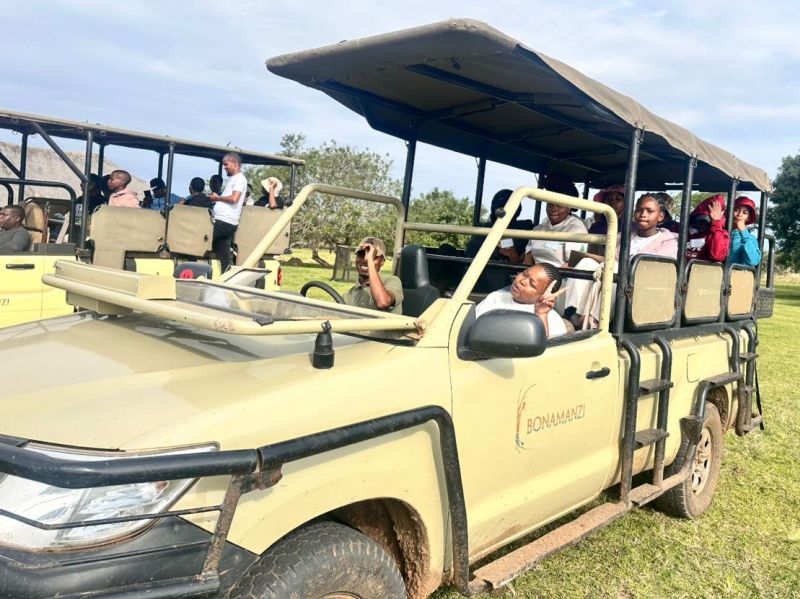
The group leaving for the afternoon game drive.
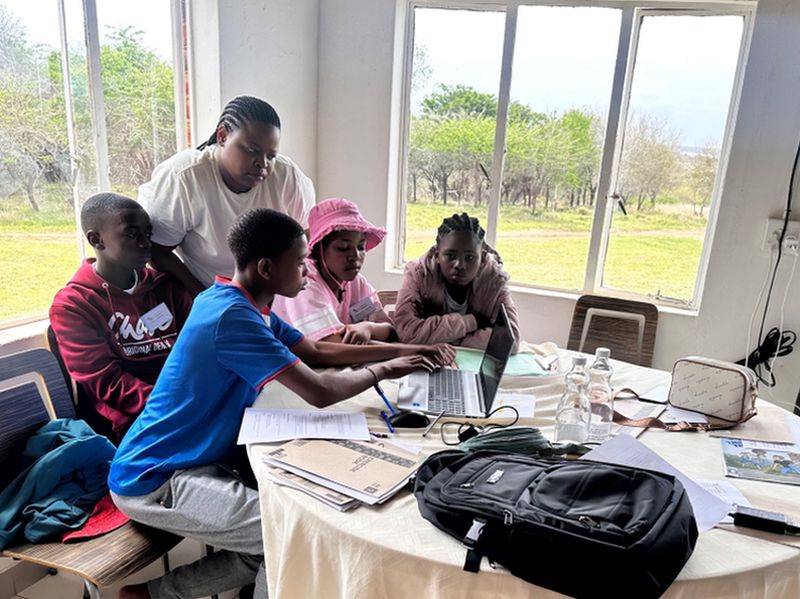
Learners working on data analysis and presentation.
Once their data had been organised and analysed, learners used their results to create PowerPoint presentations, sharing what they had discovered during the field excursions. This activity allowed them to experience the full scientific process, moving from observation in the field to data analysis and finally to communication of their results, mirroring the steps that professional scientists follow in their work.
Through this process, learners developed important 21st-century skills, including digital literacy, critical thinking, data interpretation and effective public communication. They practiced explaining their ideas clearly and logically, both in writing and orally. Many learners also demonstrated a high level of independence and initiative, formulating their own research questions, making predictions and testing hypotheses without direct assistance.
Overall, this experience helped learners connect practical fieldwork with digital tools, showing them how science relies on careful observation, accurate data handling and clear communication. It encouraged curiosity, problem-solving and confidence, giving learners a strong foundation for understanding how real-world scientific research is conducted.
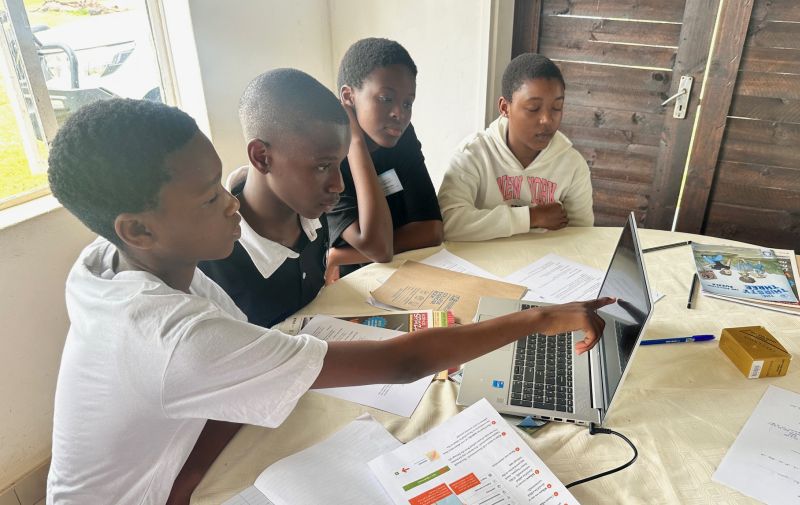
Formulating graphs and tables.
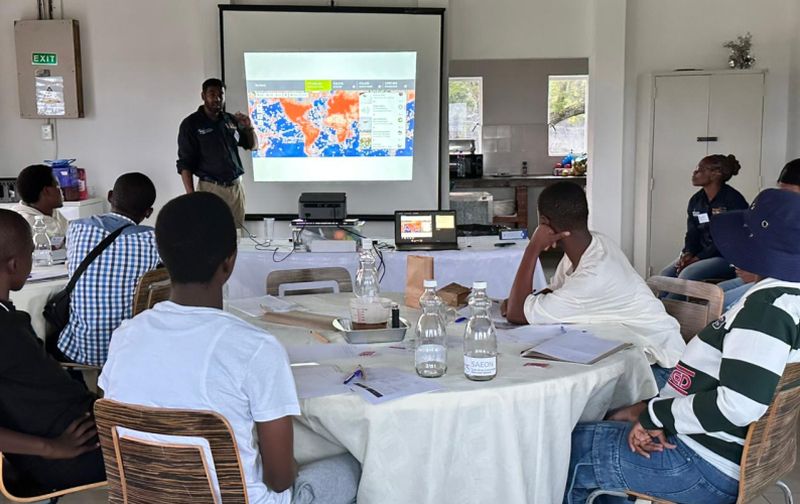
EFTEON biodiversity technician for the Northern Drakensberg landscape, Sachin Doarsamy, doing a presentation on Life of Earth and iNaturalist.
Building confidence, curiosity and collaboration
The science camp had a significant impact on both learners and educators. For learners, it was a transformative experience that strengthened their appreciation of biodiversity and the environment. The combination of fieldwork, technology and scientific inquiry encouraged them to think critically about ecological issues and their own role in protecting the environment.
Educators benefited from observing and participating in inquiry-based teaching methods that promote active learning. The camp also created space for meaningful interaction between learners and scientists, allowing young participants to see science as an accessible and dynamic field with real-world relevance.
By the end of the camp, learners reported feeling more confident in their ability to conduct scientific investigations and more motivated to pursue science-related subjects in the future. The excitement and curiosity displayed throughout the sessions reflected the success of experiential learning in nurturing a new generation of environmentally conscious thinkers.
Lasting impact
Beyond the skills acquired, the camp fostered a lasting connection between learners and the natural world. Exposure to biodiversity in its natural setting helped bridge the gap between classroom theory and practical understanding. Learners left with a sense of ownership and pride in contributing to scientific observation and data collection, an empowering step towards scientific literacy and environmental stewardship.
Initiatives like this show how SAEON continues to make a significant impact on environmental education. By promoting curiosity, critical thinking and hands-on learning, the programme inspires young people to view science not just as a subject to study, but as a powerful tool for understanding the world and making a positive difference in their communities and beyond.